

Best Grant Research Databases for Nonprofits (2026 Comparison)
If you’ve ever wondered, “What is the best grant database for nonprofits?” then you’re not alone. It’s one of the most common questions I get from clients and colleagues. The unsatisfying answer is: “it depends.” There’s no one-size-fits-all solution when it comes to grant prospect research databases. The right tool depends on your organization’s size, funding strategy, and capacity.I've used many grant databases over the years. Right now, three are part of my regular workflow: Instrumentl, GrantStation, and Candid Search (formerly Foundation Directory Online). Each serves a different purpose, and none is perfect for every nonprofit. Whether you're a one-person shop or a large organization with a full development team, this breakdown will help you figure out which platform makes the most sense for you. Please note that I’m not affiliated with any of these companies, and all opinions are my own.How do grant research databases work?
Grant databases help nonprofits identify new funding opportunities, research foundation giving history, and track deadlines and application requirements. Each works a little differently, but essentially after you pay for a subscription, you can search for funders based on information such as:Types of programs or mission areaDemographic groups servedGeographyMinimum and maximum grant award amountType of funding you want (program, general operating, capital, etc.)
Generally, using these databases is much more effective than searching on Google or using AI tools, mostly because there are so many funders that don’t have websites. Databases like Candid and Instrumentl primarily pull their information from foundations’ 990s, the tax forms that foundations are required to file. 990s include, among other things:The foundation's mission statementList of foundation's board and staff membersGrant award information: nonprofit names, locations, award amounts, and purpose of the grants
Which grant database should I use?
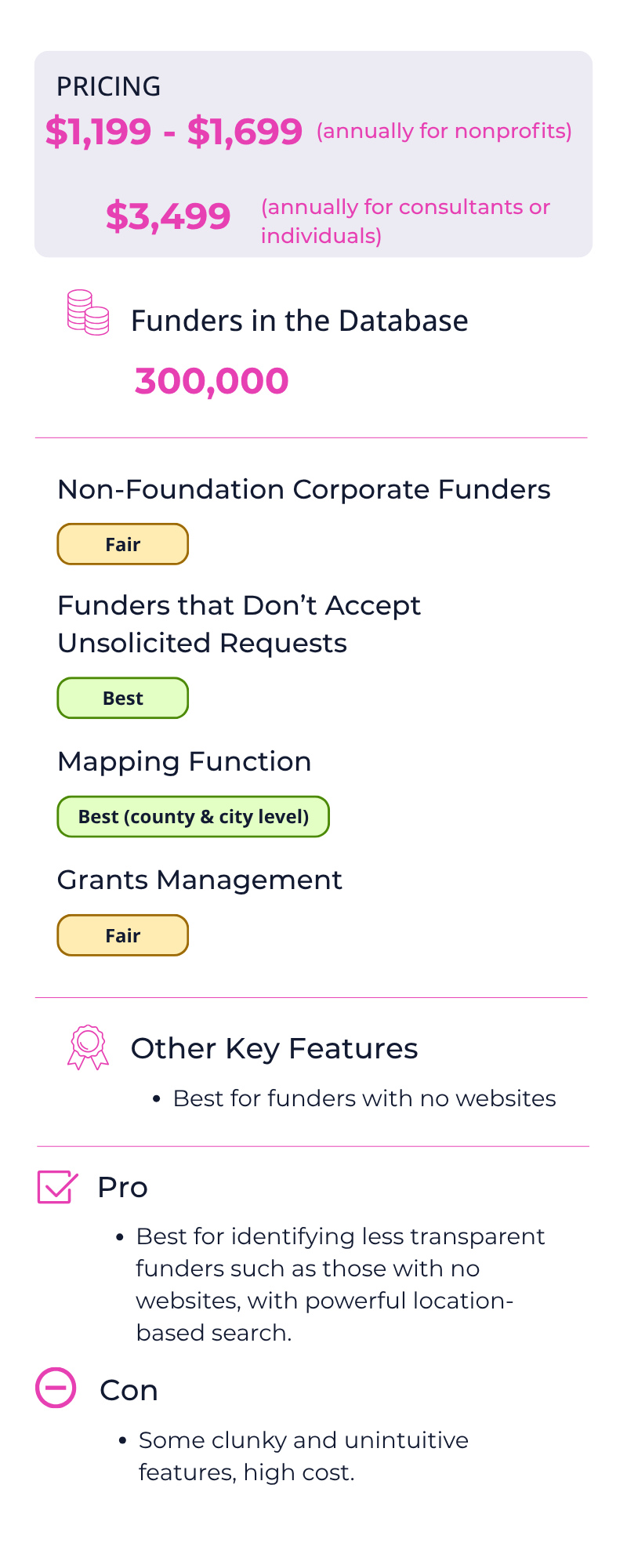
At a high level, each platform has clear pros and cons. The right choice depends on your team’s size, capacity, budget, and how you approach grant prospecting. Whichever platform you choose, the time you invest will pay off in stronger prospects, better alignment, and more winning proposals over time. → Note: Features and pricing change frequently. This overview is current as of April 2026.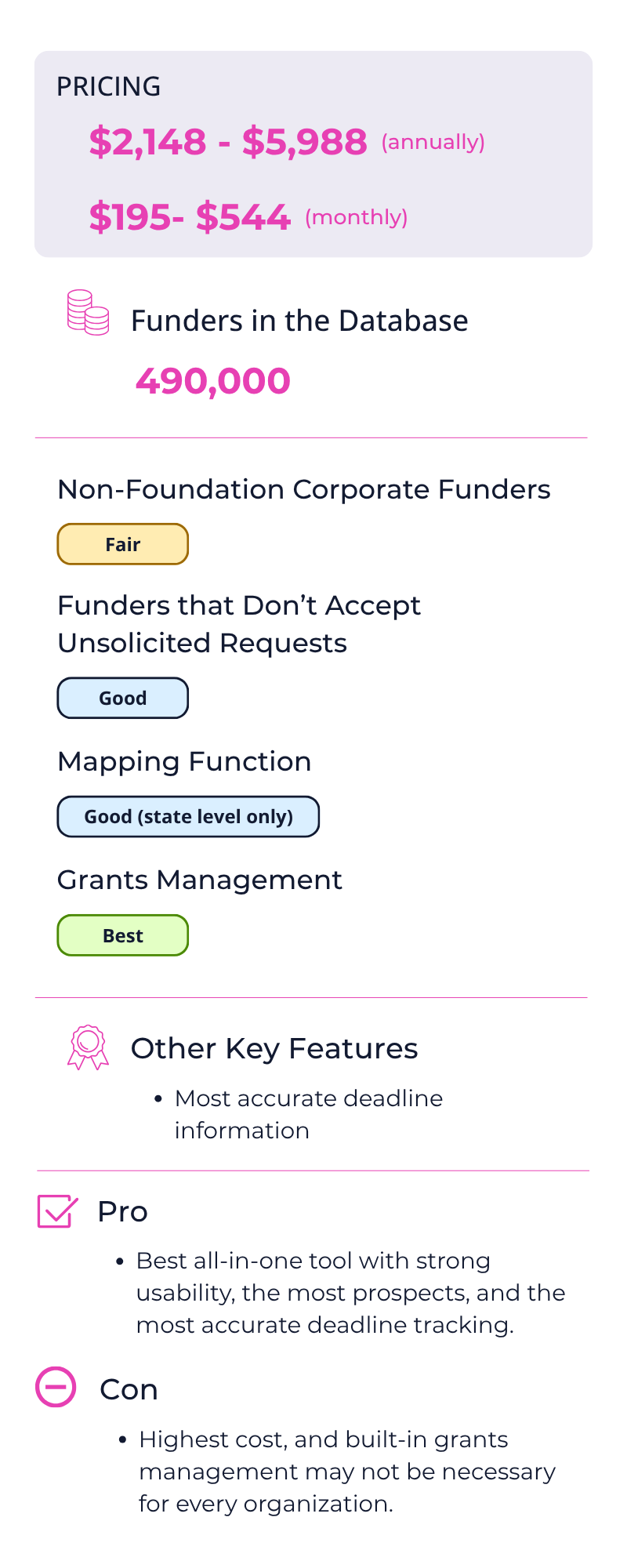

-
Corporate grants can be made through a company itself, or through a corporate foundation. A corporate foundation is a separate entity from the company, and as a foundation, they have to file 990s (and will appear in Instrumentl and Candid).
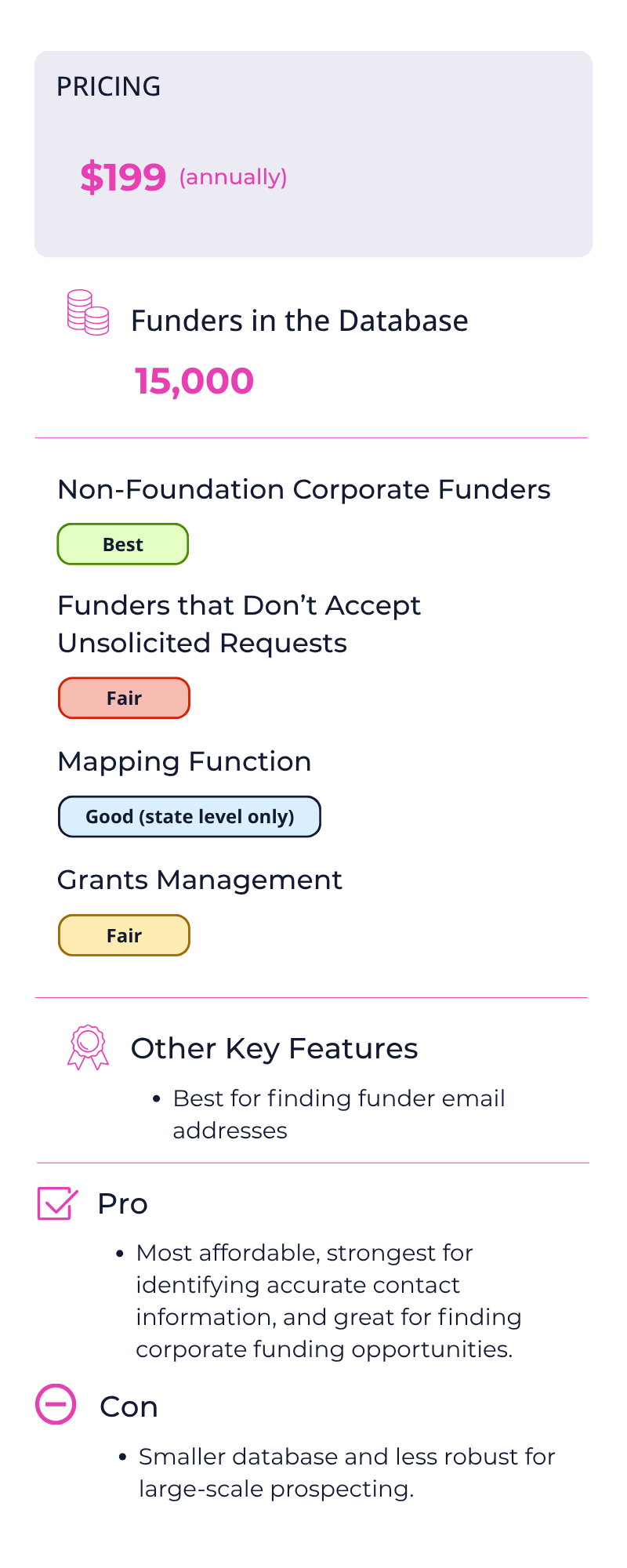
Companies that donate to nonprofits directly without a foundation don’t have to report their giving anywhere publicly, so these are harder to find. I call these “non-foundation corporate funders.” This is one of the main reasons I use GrantStation, as it has the best information for this kind of corporate grant opportunities.
-
There are many, many funders out there that do not accept unsolicited requests. What this usually means is that the foundation’s team selects the groups they want to fund, and either invite those groups to apply or make donations without an application process. (Sometimes, funders like this might let new organizations send a letter of introduction, but more often, they just don’t accept applications at all).
A lot of people ask me, “how can I apply to foundations that do not accept unsolicited proposals?” The short answer is that I generally don’t recommend this as a primary strategy unless you have a connection to the foundation. For example, if you have a board member that can make a meaningful introduction to the funder, that becomes a stronger prospect. Without that kind of access, though, the return tends to be much lower, so it really depends on your organization’s capacity and tolerance for risk. -
If you are researching and applying to multiple grants, you’ll need a way to store prospect contact information, deadlines, and other information in one place. Most grants databases are integrating increasingly powerful features, often AI-driven, offering sophisticated ways to manage a pipeline of grant opportunities from identification through submission. That said, I generally don’t recommend relying on a grant research database for grant management tracking, as switching tools later can be costly and complicated. For small organizations, I’d recommend a spreadsheet, and for larger organizations, a CRM database.
Here are a few definitions and things to keep in mind when you are comparing these platforms:
How can small nonprofits save money doing grant research?
Grants databases are expensive, and can be hard to fit into a tight budget. Here are a few practical strategies:Use free trials or monthly plans strategically: Get as much done as you can during that time, then cancel. I’ve been able to do a thorough round of research, generating 50+ new prospects in less than one month.Alternate which database you use: When I worked for small nonprofits, I would often subscribe to one database one year, then cancel it and switch to another one.Hire a grant research consultant to do the research for you: Many grant consultants subscribe to multiple platforms, and it may save you time and money to outsource your prospecting.Check for nonprofit discounts and public access through TechSoup, local libraries, and community foundations.
Where can I find government funding opportunities?
All three of these databases include public funding opportunities, but they shouldn’t be your only strategy. For the most up-to-date information about public grants, I recommend going to:Federal grants: grants.govState grants: Most states have a central website such as California’s grants.ca.gov.Local grants: This varies by region, but most municipalities have their own systems. Check out your local city and/or county websites for more information.
So, which grant database is right for me?
If you’re trying to decide which platform to pick, here’s what I recommend:Small nonprofits or beginners → Start with GrantStation and/or a short-term subscription to Instrumentl.Larger organizations → Alongside using Instrumentl and/or GrantStation, try Candid to see whether your team has any connections to foundation board and staff.
Need help getting started?
Grant prospect research is what I do. If your organization is ready to build a stronger pipeline, or just needs a second opinion on your current approach, please reach out. The first conversation is free.